


Embark on a journey into the world of modern architecture with a focus on the revolutionary impact of 3D printing. Witness how this cutting-edge technology is reshaping the way architects bring their visions to life, pushing boundaries and unlocking new possibilities.
Importance of 3D Printing in Modern Architecture
D printing has revolutionized the architectural industry by offering innovative solutions and possibilities that were previously unimaginable. Architects and designers now have the ability to create complex structures with intricate designs efficiently and cost-effectively, thanks to this cutting-edge technology.
Landmark Architectural Projects Utilizing 3D Printing
- The MX3D Bridge in Amsterdam: This stainless steel bridge, created by robots using 3D printing technology, showcases the potential for creating large-scale structures with additive manufacturing.
- The Urban Cabin in Shanghai: A 3D-printed structure designed by Xuberance, demonstrating the use of 3D printing in creating futuristic, sustainable architectural designs.
Advantages of 3D Printing in Architecture
- Complex Geometries: 3D printing allows architects to realize intricate and organic shapes that would be challenging or impossible to achieve with traditional construction methods.
- Cost-Effective Prototyping: Architects can quickly produce prototypes of their designs using 3D printing, saving time and resources in the design iteration process.
- Sustainable Construction: By using additive manufacturing techniques, architects can reduce material waste and energy consumption, contributing to more environmentally friendly construction practices.
Applications of 3D Printing in Architecture
D printing technology has revolutionized the field of architecture, offering innovative solutions for creating complex designs, rapid prototyping, and transforming the construction of buildings and structures.
Creating Complex Architectural Designs
D printing allows architects to bring their intricate and elaborate designs to life with precision and accuracy. By using advanced software and sophisticated 3D printers, architects can create complex geometries, organic shapes, and intricate details that would be challenging or impossible to achieve through traditional manufacturing methods.
This technology opens up new possibilities for architectural creativity and pushes the boundaries of design.
Rapid Prototyping and Model Making
One of the key advantages of 3D printing in architecture is its ability to quickly produce prototypes and scale models of architectural projects. Architects can use 3D printing to iterate on designs rapidly, test different concepts, and visualize their ideas in a tangible form.
This allows for better communication with clients, stakeholders, and construction teams, leading to more efficient decision-making processes and ultimately better final results.
Transforming Construction Processes
In addition to design and prototyping, 3D printing is increasingly being used in the construction of buildings and structures. This technology enables architects to fabricate building components, such as walls, columns, and facades, with greater efficiency and precision. By using 3D printing for construction, architects can reduce material waste, shorten construction timelines, and even explore new sustainable materials.
The potential for customization and optimization in construction processes is vast with 3D printing, paving the way for more sustainable and innovative architectural solutions.
Materials Used in 3D Printing for Architectural Purposes
D printing in architecture has revolutionized the way buildings and structures are designed and constructed. One crucial aspect of 3D printing in architecture is the variety of materials that can be used to create intricate models and prototypes.
Common Materials Used in 3D Printing for Architectural Models
- PLA (Polylactic Acid): PLA is a biodegradable and environmentally friendly material commonly used in 3D printing for architectural models due to its ease of use and low cost.
- ABS (Acrylonitrile Butadiene Styrene): ABS is a strong and durable thermoplastic often used in 3D printing for architectural models that require higher impact resistance.
- Resin: Resin-based 3D printing is popular for creating highly detailed architectural models with a smooth finish, making it ideal for showcasing intricate designs.
Properties of Different Materials Used in 3D Printing for Architectural Applications
- Strength and Durability: ABS is known for its strength and durability, making it suitable for architectural models that need to withstand handling and transportation.
- Detail and Finish: Resin-based materials offer exceptional detail and a smooth finish, perfect for showcasing intricate architectural designs with precision.
- Cost and Eco-friendliness: PLA is a cost-effective and environmentally friendly option for architectural models, making it a popular choice for sustainable design projects.
Advancements in Materials Technology Enhancing 3D Printing in Architecture
- Composite Materials: The development of composite materials combining different properties has expanded the possibilities for 3D printing in architecture, allowing for the creation of structures with unique characteristics.
- Metallic Filaments: The introduction of metallic filaments has enabled architects to 3D print architectural elements with a metallic finish, adding a touch of sophistication to designs.
- Bio-based Materials: The use of bio-based materials in 3D printing for architecture is on the rise, offering sustainable options that align with the growing emphasis on eco-friendly construction practices.
Sustainability and Environmental Impact of 3D Printing in Architecture
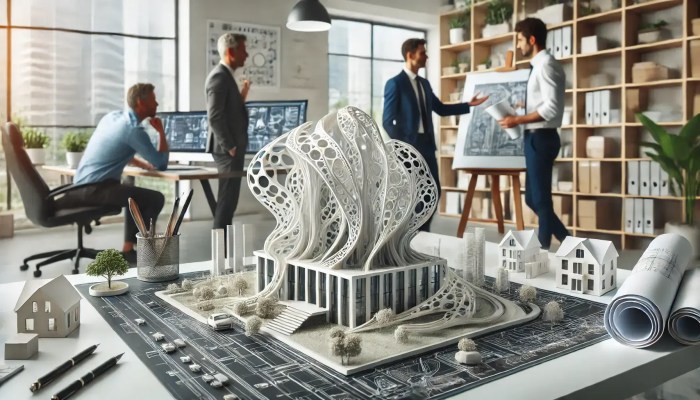
D printing in architecture has the potential to revolutionize sustainable practices in the construction industry. By utilizing this innovative technology, architects and builders can significantly reduce waste and energy consumption, ultimately leading to a more environmentally friendly approach to construction.
Reduction of Material Waste
D printing allows for precise material usage, minimizing waste typically generated during traditional construction methods. By only depositing material where it is needed, this technology helps reduce the amount of discarded materials, contributing to a more sustainable building process.
Energy Efficiency
One of the key environmental benefits of 3D printing in architecture is its potential to improve energy efficiency. Traditional construction methods often require a significant amount of energy for manufacturing and transportation of materials. With 3D printing, materials can be used more efficiently and locally sourced, reducing the overall energy consumption associated with building projects.
Recycling and Reusability
D printing allows for the use of recycled materials, promoting a circular economy within the construction industry. By incorporating recycled content into the printing process, architects can reduce the environmental impact of their projects and contribute to a more sustainable future for the built environment.
Challenges and Opportunities
While 3D printing offers numerous environmental benefits, challenges such as the use of plastic materials and energy consumption during the printing process must be addressed. However, ongoing research and development in sustainable materials and printing techniques present opportunities to further enhance the eco-friendliness of 3D printing in architecture.
Concluding Remarks
In conclusion, the integration of 3D printing in modern architecture represents a pivotal shift towards innovation, sustainability, and efficiency. As we delve deeper into this realm, the future holds endless prospects for architectural marvels yet to be unveiled.
FAQ Overview
How is 3D printing revolutionizing modern architecture?
3D printing is transforming modern architecture by enabling architects to create intricate designs with greater precision and speed, pushing the boundaries of what is achievable.
What are some landmark architectural projects that have utilized 3D printing?
Examples include the MX3D Bridge in Amsterdam and the Urban Cabin project in New York, showcasing the versatility and creativity of 3D printing technology.
How does 3D printing contribute to sustainable architectural practices?
3D printing reduces waste by using only the necessary materials, promotes energy efficiency, and allows for the creation of eco-friendly structures in modern architecture.